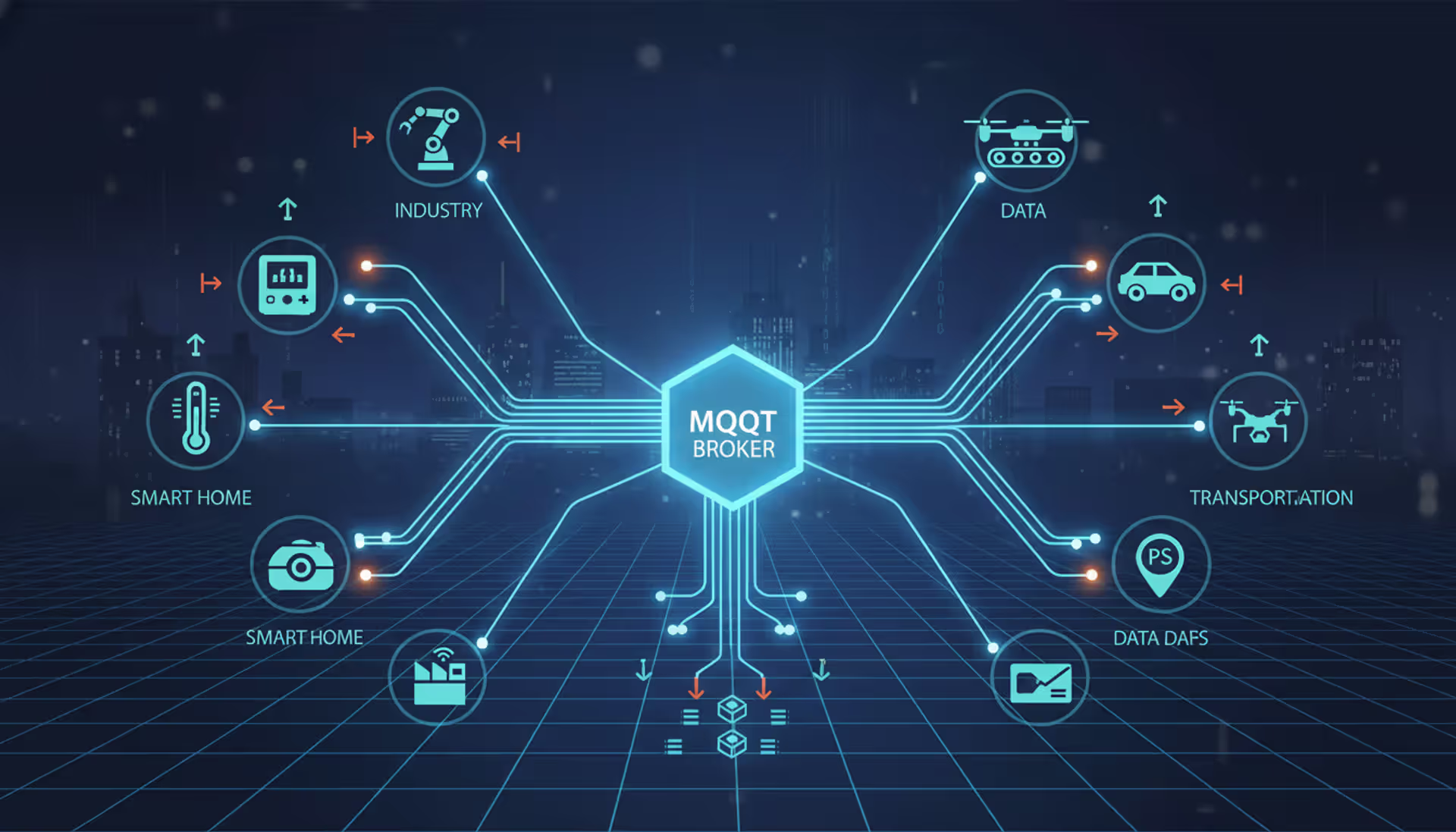
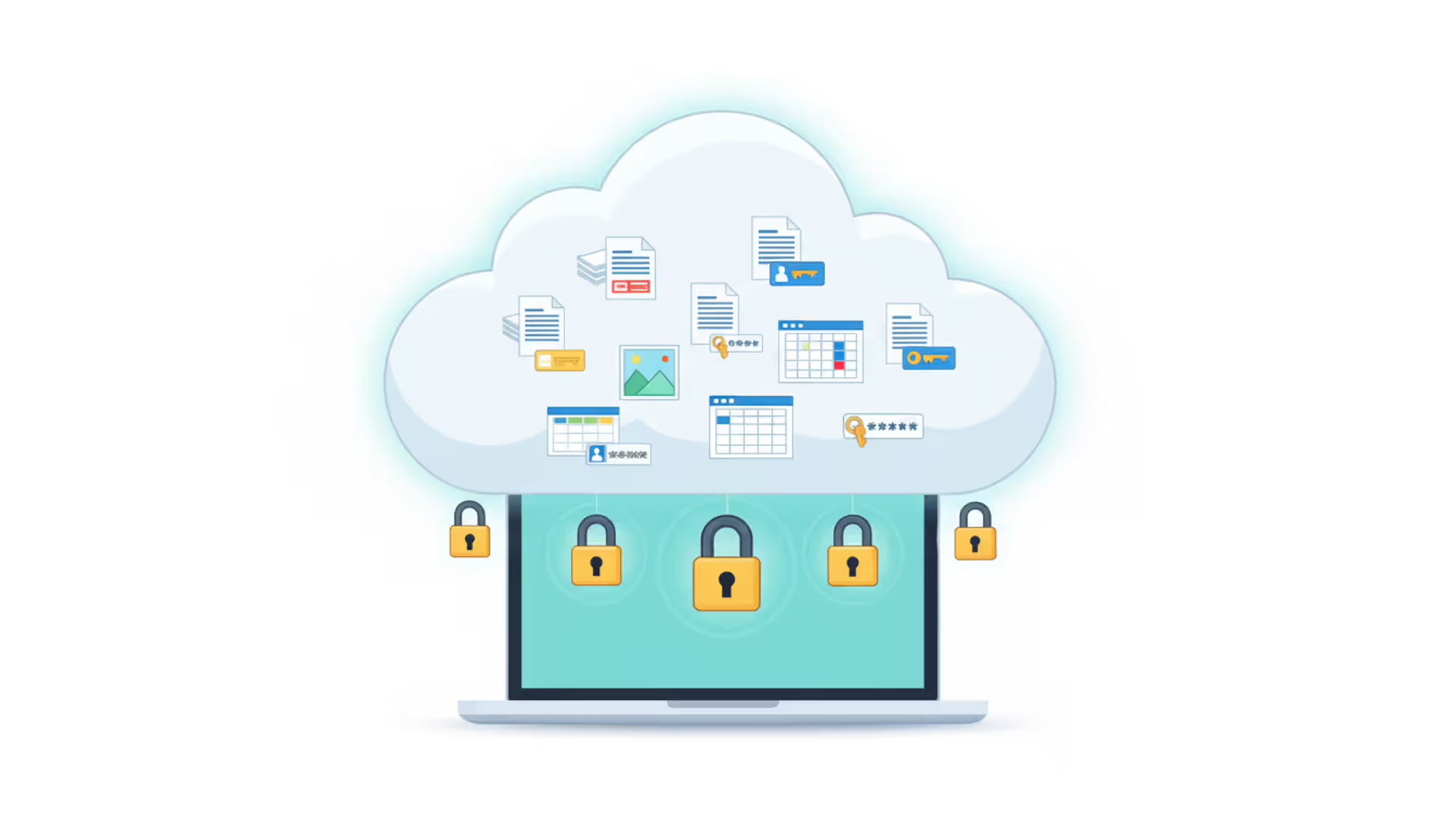
Cloud infrastructure has become the backbone of modern IoT deployments, enabling millions of connected devices to communicate, process data, and deliver actionable insights at scale. For businesses evaluating how to build or expand their IoT ecosystems, understanding the relationship between IoT and cloud computing is no longer optional—it's a competitive necessity.
What Is IoT Cloud and How Does It Work
IoT cloud refers to the cloud-based infrastructure and services that enable Internet of Things devices to connect, communicate, store data, and execute analytics remotely. Unlike standalone embedded systems, IoT devices rely on cloud platforms to handle the heavy lifting of data processing, storage, machine learning, and application delivery.
The core workflow operates in four stages. First, sensors and devices collect data—temperature readings from a warehouse, GPS coordinates from delivery trucks, or vibration patterns from industrial machinery. Second, this data transmits to the cloud via cellular networks, Wi-Fi, LoRaWAN, or other connectivity protocols. Third, cloud services ingest, normalize, and store the incoming streams, often processing millions of data points per second. Fourth, analytics engines, dashboards, or automated rules transform raw data into alerts, reports, or commands sent back to devices.
What makes the cloud essential for IoT is elasticity. A manufacturer might deploy 500 sensors today and 50,000 next quarter. Traditional on-premises servers would require months of procurement and rack space planning. Cloud platforms scale compute and storage on demand, charging only for resources consumed. This pay-as-you-grow model removes capital barriers for pilot projects and rapid expansion.
The relationship between IoT and cloud also introduces challenges. Network latency can delay critical commands—problematic for autonomous vehicles or medical devices. Bandwidth costs accumulate when streaming high-resolution video from thousands of cameras. Dependence on internet connectivity means outages can paralyze operations. Smart architectures address these issues through edge computing, hybrid models, and intelligent data filtering at the device layer.
Author: Trevor Langford;
Source: milkandchocolate.net
Key Components of IoT Cloud Architecture
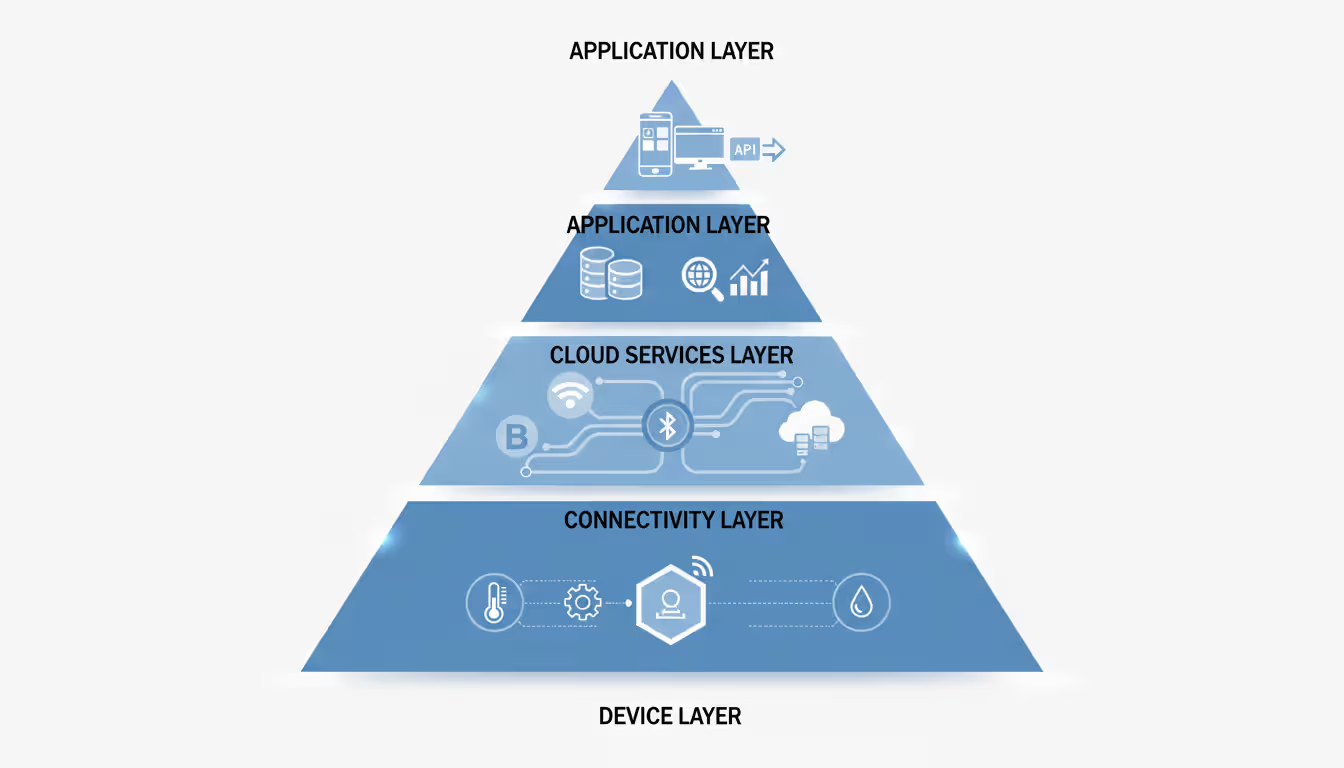
Understanding IoT cloud architecture requires examining four interconnected layers, each serving distinct functions while working as an integrated system.
Device Layer: Physical sensors, actuators, gateways, and edge nodes form the foundation. These components collect telemetry, execute local logic, and communicate upstream. Modern devices often run lightweight operating systems like FreeRTOS or Linux variants, with embedded SDKs that handle authentication, data serialization, and protocol management. A common mistake is underestimating firmware complexity—devices need over-the-air update capabilities, certificate rotation, and fallback connectivity options.
Connectivity Layer: This middleware manages device registration, protocol translation, and message routing. MQTT and CoAP dominate for constrained devices due to low overhead, while HTTP/REST suits devices with reliable power and bandwidth. The connectivity layer enforces access policies, throttles message rates to prevent denial-of-service scenarios, and maintains device shadows—virtual representations that cache last-known states when devices go offline.
Cloud Services Layer: The engine room includes databases (time-series for sensor data, relational for metadata), stream processing frameworks, and compute instances running analytics or ML models. Object storage archives historical data for compliance or training datasets. Message queues buffer spikes in ingestion rates. Serverless functions trigger workflows—when a temperature exceeds 85°F, dispatch an alert and activate cooling systems.
Application Layer: APIs, dashboards, and third-party integrations deliver value to end users. A logistics company might expose truck locations via REST API to customer portals, while internal teams use web dashboards showing fleet health metrics. Mobile apps provide field technicians with device diagnostics. Webhook integrations push alerts into Slack or ticketing systems.
Visualize this as a pyramid: millions of devices at the base funnel data through connectivity middleware into centralized cloud services, which feed a smaller number of applications at the top. Data flows bidirectionally—commands and firmware updates travel downward from applications through cloud services and connectivity layers back to devices.
Author: Trevor Langford;
Source: milkandchocolate.net
Types of IoT Cloud Solutions
Deployment models and service tiers shape how businesses implement IoT cloud infrastructure, each offering distinct trade-offs.
Public Cloud: AWS, Azure, and Google Cloud provide multi-tenant platforms where customers share underlying hardware while maintaining logical isolation. Public clouds excel at rapid deployment, global reach, and eliminating infrastructure management. A startup can launch an IoT pilot in hours without negotiating data center contracts. The downside is less control over data residency, potential noisy-neighbor performance issues, and compliance complexity for regulated industries.
Private Cloud: Dedicated infrastructure hosted on-premises or in colocation facilities gives organizations full control over hardware, network topology, and security policies. Banks and healthcare providers often mandate private deployments to meet strict data sovereignty requirements. The trade-off is capital expense, slower scaling, and the need for in-house cloud expertise. Private clouds make sense when regulatory constraints outweigh cost efficiency.
Hybrid Cloud: Combining public and private elements allows sensitive data to remain on-premises while leveraging public cloud for burst capacity or global edge locations. A manufacturer might process production-line data locally for millisecond latency while replicating aggregated metrics to public cloud for long-term analytics. Hybrid models introduce integration complexity—syncing identity management, monitoring, and security policies across environments requires sophisticated orchestration.
Service Models: IaaS (Infrastructure as a Service) provides raw compute, storage, and networking—maximum flexibility but requires managing operating systems, databases, and application stacks. PaaS (Platform as a Service) offers managed databases, message queues, and container orchestration, reducing operational burden while sacrificing some customization. SaaS (Software as a Service) delivers turnkey IoT applications—fleet management portals or energy monitoring dashboards—with minimal technical setup but limited extensibility.
Most enterprises adopt multi-model strategies. Core device management runs on PaaS for reliability, while specialized analytics leverage IaaS for custom ML frameworks, and business users access SaaS dashboards.
Author: Trevor Langford;
Source: milkandchocolate.net
How to Choose the Best IoT Cloud Platform
Selecting an IoT cloud platform demands evaluating technical capabilities against business requirements, budget constraints, and long-term strategic alignment.
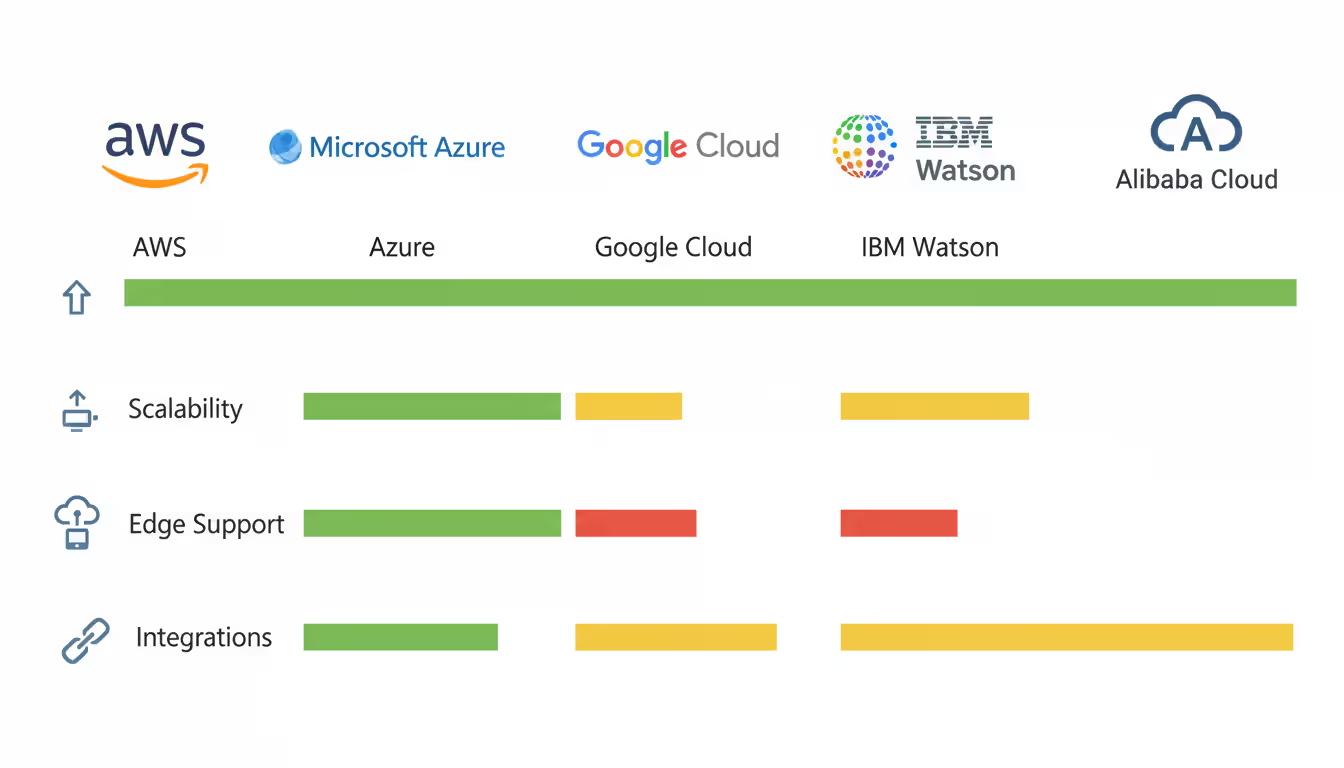
Scalability: Can the platform handle your device count trajectory? Test ingestion rates—some platforms throttle free tiers at 100 messages per second, inadequate for industrial deployments. Examine horizontal scaling: does adding capacity require downtime or manual intervention? Look for auto-scaling policies that adjust compute resources based on message volume.
Security: Device authentication mechanisms vary widely. Certificate-based mutual TLS provides strong security but complicates provisioning. Shared secrets are simpler but vulnerable if devices lack secure storage. Evaluate encryption at rest and in transit, role-based access controls, and audit logging. Ask vendors how they handle compromised device scenarios—can you remotely revoke credentials or quarantine infected devices?
Integration: Pre-built connectors for enterprise systems (ERP, CRM, BI tools) accelerate time-to-value. Check API maturity—RESTful interfaces with comprehensive documentation enable custom integrations. Support for standard protocols (MQTT, AMQP, WebSockets) prevents vendor lock-in. Data export options matter for regulatory compliance and disaster recovery.
Pricing: IoT platforms charge for message volume, device connections, data storage, and compute resources. A platform quoting $0.50 per million messages sounds cheap until you calculate 10,000 devices sending telemetry every 30 seconds—that's 28.8 billion messages monthly. Factor in egress fees for data leaving the cloud and premium support tiers. Request pricing models for your specific use case, not generic calculator estimates.
Vendor Support: Evaluate SLA guarantees, response times, and escalation paths. Community forums and documentation quality indicate ecosystem maturity. Consider geographic coverage—does the vendor operate edge locations near your device deployments to minimize latency?
Comparison Table of Leading Platforms
Platform
Pricing Model
Supported Protocols
Scalability
Edge Computing
Integration Ease
AWS IoT Core
Pay-per-message + connection time
MQTT, HTTPS, LoRaWAN
Millions of devices, auto-scaling
AWS Greengrass for local processing
Extensive AWS service integration, steep learning curve
Azure IoT Hub
Tiered (Free, Basic, Standard)
MQTT, AMQP, HTTPS
Millions of devices, manual tier upgrades
Azure IoT Edge runtime
Strong Microsoft ecosystem fit, good hybrid support
Google Cloud IoT Core
Per-device monthly fee + data volume
MQTT, HTTP
Scales well, integrates with Pub/Sub
Limited native edge, partners with third parties
Excellent data analytics via BigQuery, fewer IoT-specific features
IBM Watson IoT
Subscription-based tiers
MQTT, HTTP
Enterprise-scale, requires planning
Edge Analytics for local insights
Strong AI/ML integration, complex pricing
Trade-Offs in Practice
A logistics company chose AWS IoT Core for its global edge presence and Lambda integration, accepting higher complexity. A building automation firm selected Azure IoT Hub because their existing Active Directory and Power BI investments simplified identity management and reporting. A research lab prototyping environmental sensors picked Google Cloud IoT for its straightforward Pub/Sub data pipelines and BigQuery analysis, despite limited edge options.
IoT Cloud Hosting Options and Considerations
Where computation occurs—centralized cloud data centers versus distributed edge locations—fundamentally shapes performance, cost, and architecture.
Centralized Cloud Hosting: All data flows to regional data centers for processing and storage. This model simplifies management, enables powerful analytics on aggregated datasets, and reduces edge infrastructure costs. It works well for use cases tolerating 100–500ms latency: daily equipment health reports, monthly energy consumption analytics, or inventory tracking where second-by-second precision isn't critical.
The limitations surface in real-time scenarios. Autonomous forklifts can't wait 300ms for collision-avoidance commands. Video surveillance systems transmitting raw 4K streams from 500 cameras saturate network bandwidth and rack up egress fees. Centralized hosting also creates single points of failure—internet outages isolate devices from cloud services.
Edge Hosting: Compute resources deployed near devices—factory floors, retail stores, vehicles—process data locally. Edge nodes run containerized workloads, ML inference models, and data filtering logic. Only aggregated results or anomalies transmit to the cloud, reducing bandwidth 10–100x in typical deployments.
Edge computing enables sub-10ms response times for safety-critical applications, operates during network disruptions, and minimizes data transfer costs. The trade-off is managing distributed infrastructure—updating software across hundreds of edge nodes, monitoring hardware failures, and securing physical access to edge servers.
Hybrid Approaches: Most production systems blend centralized and edge hosting. A smart factory runs real-time quality control at the edge while uploading hourly summaries to the cloud for trend analysis. Retail chains process point-of-sale transactions locally but sync inventory to central databases nightly. This balances performance, cost, and operational complexity.
Data Residency: Regulatory frameworks like GDPR mandate that certain data remain within geographic boundaries. Healthcare providers must consider HIPAA requirements for patient data. Evaluate whether platforms offer regional data centers in required jurisdictions and support data sovereignty controls.
Common Use Cases for IoT and Cloud Integration
Real-world deployments illustrate how businesses apply IoT cloud platforms to solve operational challenges and create new revenue streams.
Smart Manufacturing: Factories instrument production lines with vibration sensors, thermal cameras, and quality-control vision systems. Cloud platforms ingest telemetry from thousands of sensors, applying ML models to predict equipment failures 48–72 hours before breakdowns. Maintenance teams receive alerts via mobile apps, reducing unplanned downtime by 30–40%. Historical data trains models to optimize production parameters—adjusting temperature curves or feed rates to minimize defects.
Author: Trevor Langford;
Source: milkandchocolate.net
Healthcare Monitoring: Wearable devices and home medical equipment transmit vital signs to cloud platforms. Algorithms detect anomalies—irregular heart rhythms or dangerous blood glucose trends—triggering alerts to clinicians. Cloud storage maintains longitudinal patient records, enabling trend analysis across populations. Telehealth applications stream video consultations, integrating device data into electronic health records.
Fleet Management: GPS trackers, fuel sensors, and diagnostic ports on vehicles upload location, performance, and driver behavior data. Cloud dashboards show real-time fleet positions, route optimization suggestions, and maintenance schedules based on engine hours and fault codes. Geofencing rules alert managers when vehicles enter unauthorized zones. Historical data identifies inefficient routes or drivers needing coaching.
Smart Cities: Traffic cameras, air quality sensors, and smart streetlights connect to municipal cloud platforms. Analytics optimize traffic signal timing based on real-time congestion, reducing commute times. Environmental sensors trigger alerts when pollution exceeds thresholds. Predictive models forecast parking availability, directing drivers to open spots and reducing circling traffic.
Each use case shares common patterns: distributed sensors, cloud aggregation, analytics driving automated actions or human decisions, and feedback loops that improve system performance over time.
Security and Compliance in IoT Cloud Deployments
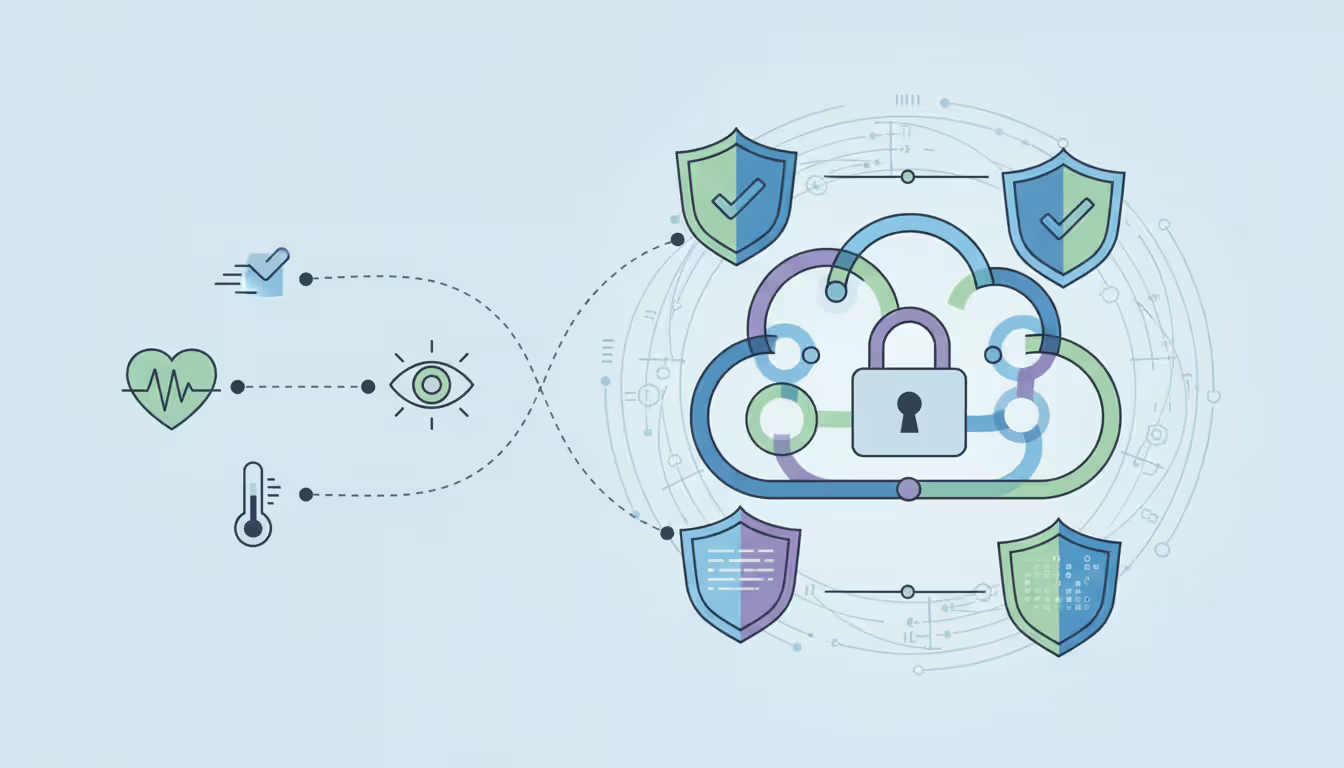
IoT systems expand attack surfaces dramatically—every connected device is a potential entry point for malicious actors. Robust security requires defense-in-depth strategies spanning devices, networks, and cloud infrastructure.
Author: Trevor Langford;
Source: milkandchocolate.net
Device Authentication: Mutual TLS certificates provide strong identity verification, ensuring only authorized devices connect to cloud platforms. Certificate provisioning during manufacturing and secure storage in hardware modules (TPM chips) prevent cloning. Implement certificate rotation policies—reissue credentials every 12–24 months to limit exposure from compromised keys.
Data Encryption: Encrypt data in transit using TLS 1.3 or higher. Encrypt data at rest in cloud storage using AES-256 or equivalent. Key management is critical—use cloud-native key management services with automatic rotation and access auditing. Avoid hardcoding encryption keys in device firmware.
Network Segmentation: Isolate IoT devices on separate VLANs or virtual private clouds. Restrict device-to-device communication unless required. Use firewall rules to limit cloud access to specific endpoints—devices should reach IoT message brokers but not general internet resources.
Access Control: Implement least-privilege policies. Devices should only publish to assigned topics and subscribe to relevant command channels. Human users need role-based access—field technicians see device diagnostics, executives view aggregated dashboards, administrators manage configurations.
Compliance Frameworks: GDPR requires data minimization, user consent, and breach notification within 72 hours. HIPAA mandates encryption, access logs, and business associate agreements with cloud vendors. ISO 27001 certification demonstrates systematic security management. Map compliance requirements to cloud platform features—does the vendor provide audit logs, data residency controls, and compliance attestations?
Vulnerability Management: IoT devices often run for 5–10 years, outlasting vendor support cycles. Plan for over-the-air firmware updates from day one. Monitor CVE databases for vulnerabilities in device SDKs, open-source libraries, and cloud connectors. Establish incident response procedures for compromised devices—can you remotely disable or quarantine them?
The convergence of IoT and cloud computing has fundamentally shifted the economics of connected systems. What once required months of infrastructure planning now launches in days, but this speed introduces security and architectural complexity that many organizations underestimate. Success demands treating IoT cloud platforms as critical infrastructure, not just another SaaS subscription
— Dr. Sarah Chen
Frequently Asked Questions
What is the difference between IoT cloud and traditional cloud computing?
Traditional cloud computing provides general-purpose infrastructure for web applications, databases, and enterprise software. IoT cloud platforms add specialized capabilities: device management at massive scale, protocol gateways for constrained devices, time-series databases optimized for sensor data, and edge computing integration. IoT clouds handle bidirectional communication—commands flowing to devices, not just data retrieval. They also emphasize low-latency ingestion, handling millions of small messages per second rather than fewer large transactions.
How much does an IoT cloud platform cost?
Pricing varies dramatically based on device count, message volume, and features. AWS IoT Core charges approximately $1 per million messages plus $0.08 per million connection minutes. For 1,000 devices sending data every minute, expect $200–400 monthly before storage and compute costs. Azure IoT Hub's Basic tier starts at $10 monthly for 400,000 messages, while Standard tier costs $25+ for 6 million messages. Google Cloud IoT charges $0.50 per device monthly plus data transfer fees. Enterprise deployments with 100,000+ devices often negotiate custom pricing. Factor in data storage (time-series databases run $0.20–0.50 per GB monthly), analytics compute, and egress fees.
Can I use multiple IoT cloud platforms together?
Yes, multi-cloud strategies mitigate vendor lock-in and leverage platform-specific strengths. A retailer might use Azure IoT Hub for store devices (integrating with existing Microsoft infrastructure) while running AWS IoT Core for supply chain sensors (leveraging superior Lambda integration). The challenge is managing multiple SDKs, security policies, and billing systems. Data synchronization between platforms requires custom integration code or third-party middleware. For most organizations, multi-cloud adds complexity that outweighs benefits unless specific regulatory or technical requirements demand it.
What security risks come with IoT cloud solutions?
Major risks include compromised device credentials enabling unauthorized access, man-in-the-middle attacks intercepting unencrypted data, denial-of-service attacks overwhelming cloud endpoints, and insider threats from overly permissive access controls. Weak device authentication allows attackers to impersonate sensors, injecting false data. Vulnerabilities in device firmware create entry points for malware. Cloud misconfigurations—publicly accessible storage buckets or overly broad IAM policies—expose sensitive data. Mitigate risks through certificate-based authentication, end-to-end encryption, network segmentation, regular security audits, and incident response planning.
Do I need coding skills to set up an IoT cloud platform?
Basic deployments using vendor-provided SDKs and templates require minimal coding—connecting a Raspberry Pi to AWS IoT Core involves copying example Python scripts and updating configuration files. However, production systems demand software engineering skills: writing device firmware, implementing data processing pipelines, building APIs, and creating dashboards. No-code platforms like Losant or Ubidots offer visual workflow builders for simple use cases but limit customization. Plan for development resources unless using turnkey SaaS solutions. Many organizations hire IoT consultancies for initial setup, then train internal teams for ongoing management.
Which IoT cloud platform is best for small businesses?
Small businesses benefit from platforms with low entry costs, simple pricing, and quick setup. Google Cloud IoT offers straightforward per-device pricing without complex tier structures. Azure IoT Hub's free tier supports 8,000 messages daily—sufficient for pilot projects. AWS IoT Core provides the most features but demands steeper learning curves. SaaS platforms like Particle or Hologram bundle device connectivity, cloud hosting, and dashboards into fixed monthly fees ($50–200), eliminating infrastructure management. Evaluate based on your team's technical skills—less experienced teams should prioritize managed SaaS solutions over flexible but complex IaaS platforms.
IoT cloud platforms have matured from experimental technology into mission-critical infrastructure powering everything from factory automation to connected healthcare. Success requires matching platform capabilities to specific business needs—scalability for growth trajectories, security for compliance mandates, integration for existing technology stacks, and pricing aligned with budget realities.
The choice between public, private, and hybrid deployments hinges on regulatory requirements, latency tolerance, and operational expertise. Edge computing addresses real-time processing needs while centralized cloud hosting enables powerful analytics on aggregated data. Most production systems blend both approaches, optimizing for performance and cost.
Security cannot be an afterthought. Device authentication, encryption, network segmentation, and compliance frameworks must be embedded from initial design through long-term operations. As IoT deployments scale from hundreds to millions of devices, architectural decisions made during pilot phases either enable growth or create technical debt that stalls expansion.
The platforms compared here—AWS IoT Core, Azure IoT Hub, Google Cloud IoT, and IBM Watson IoT—each excel in different scenarios. Evaluate them through proof-of-concept projects that test your specific device types, data volumes, and integration requirements. The best IoT cloud platform is the one that aligns with your organization's technical capabilities, compliance needs, and long-term strategic vision.
A reliable wireless connection has become as essential as electricity. This comprehensive guide covers wifi network design, installation, monitoring, and troubleshooting. Learn how to choose equipment, optimize performance, and decide between DIY and professional installation for your home or business
A virtual network is a software-defined networking environment that replicates physical network infrastructure without dedicated hardware. This guide covers core components, virtual network functions, gateways, security best practices, cloud provider services, and a practical 6-step setup process
MQTT brokers route messages between IoT devices using publish-subscribe architecture. This guide covers selecting the right broker, comparing free options like Mosquitto and EMQX, testing online brokers, and avoiding security and scalability mistakes that derail IoT projects
Choosing secure cloud storage requires understanding encryption types, privacy policies, and security features that actually protect your personal files. This guide compares top zero-knowledge providers and explains the technical differences between genuine privacy protection and basic security
The content on this website is provided for general informational purposes only. It is intended to offer insights, commentary, and analysis on cloud computing, network infrastructure, cybersecurity, and IT solutions, and should not be considered professional, technical, or legal advice.
All information, articles, and materials presented on this website are for general informational purposes only. Technologies, standards, and best practices may vary depending on specific environments and may change over time. The application of any technical concepts depends on individual systems, configurations, and requirements.
This website is not responsible for any errors or omissions in the content, or for any actions taken based on the information provided. Users are encouraged to seek qualified professional advice tailored to their specific IT infrastructure, security, and business needs before making decisions.