Last year, a mid-sized healthcare provider lost $4.2 million after ransomware jumped from a compromised receptionist's laptop to their entire patient database. The attack succeeded because every device on their network could talk to every other device—no barriers, no checkpoints, just one giant digital free-for-all.
Here's the thing: attackers rarely need sophisticated exploits when they can simply walk from one system to another once they're inside. Network segmentation stops that lateral movement cold by carving your network into separate security zones, each with its own access rules and monitoring.
Think of it like a ship with watertight compartments. When one section floods, the others stay dry. Your network should work the same way—compromise in one area shouldn't sink the whole ship.
What Is Network Segmentation and How Does It Work
At its core, segmentation splits one large network into multiple smaller ones. Each mini-network operates independently, with security controls managing what crosses between them.
Here's how it actually functions: when a device in Zone A tries connecting to something in Zone B, security systems sitting at the boundary check whether that specific connection is allowed. If the ruleset says yes, traffic flows through. If not, the connection dies right there.
You've got two main ways to slice things up:
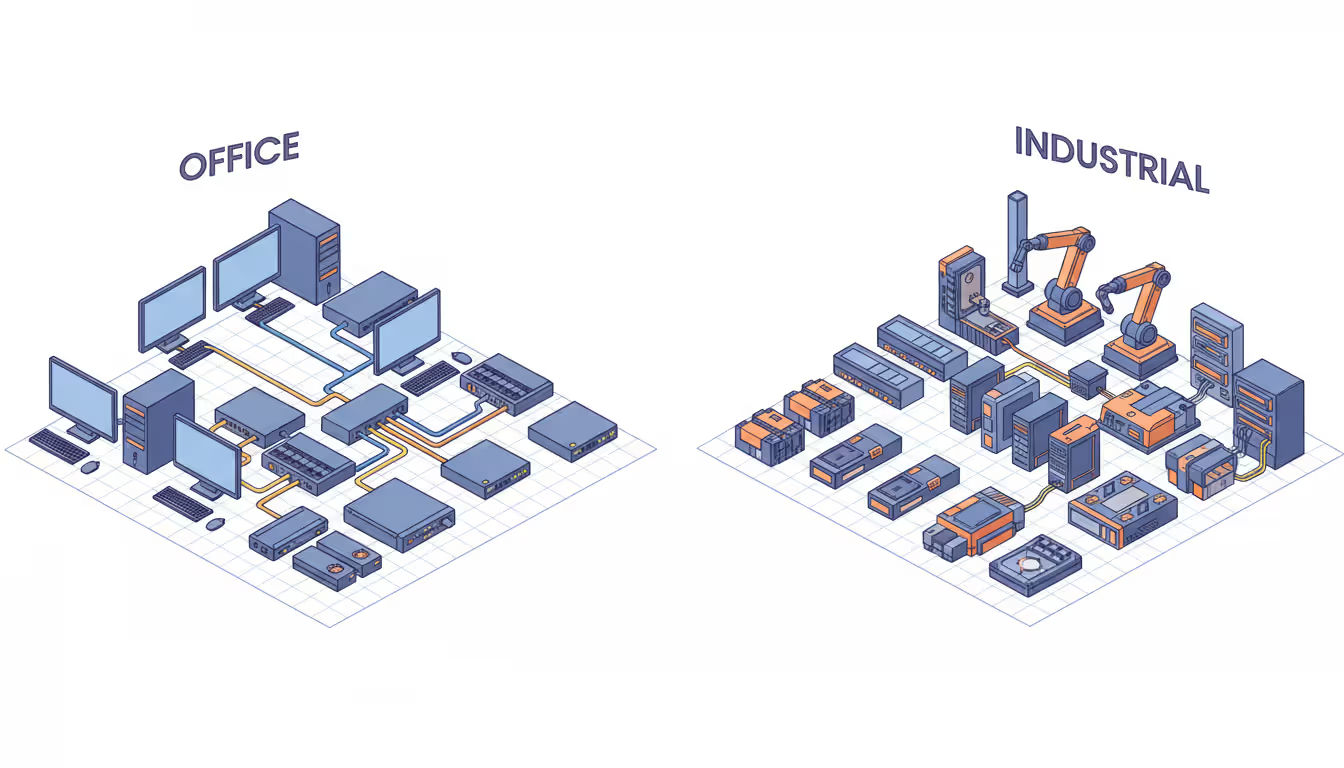
Physical segmentation means literally separate hardware—different cables, switches, routers, the works. A chemical plant might physically separate their office network from the systems controlling manufacturing equipment. Zero shared infrastructure means maximum security, but you're buying and maintaining double (or triple, or quadruple) the gear. Plus, you'll need the rack space for it all.
Author: Rachel Denholm;
Source: milkandchocolate.net
Logical segmentation creates virtual walls using the hardware you already own. VLANs (Virtual Local Area Networks) are the most popular method—you configure your switches to treat certain ports as if they're on completely different networks, even though they're physically connected to the same device. A hotel might set up separate VLANs for guest Wi-Fi, room keyfobs, security cameras, and back-office systems using just a few switches.
Subnets divide up your IP address space into smaller chunks. Each subnet gets its own IP range (like 192.168.10.0/24 for marketing, 192.168.20.0/24 for engineering), with routers deciding what traffic moves between them. Combine subnets with firewall rules and you've got serious control. A law firm might create separate subnets for each practice area, ensuring intellectual property lawyers can't accidentally access criminal defense case files.
Next-gen firewalls stationed between segments inspect everything passing through. We're not talking about simple "block this port" filters—modern firewalls examine application data, scan for threats, and enforce policies based on who's connecting and what they're trying to access. A bank might position firewalls between their ATM network, online banking platform, and internal employee systems, watching every packet that crosses those boundaries.
Software-defined networking (SDN) has changed the game by making segmentation dynamic. Instead of static rules you set once and forget, SDN adjusts policies on the fly based on user identity, device health, time of day, threat level—whatever factors matter to your security team.
Why Network Segmentation Matters for Modern Organizations
You might be wondering why network segmentation is important enough to justify the effort and cost. Let me show you with real consequences.
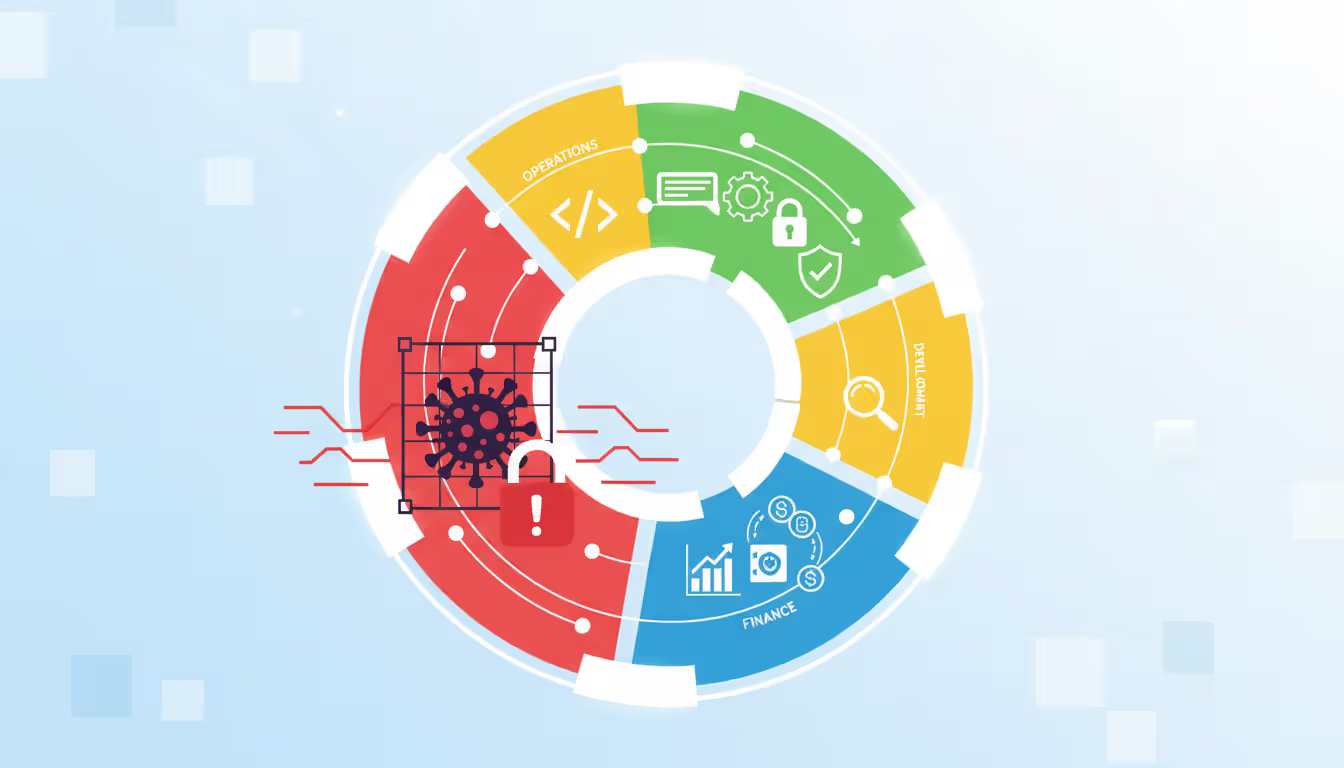
Breach containment saves companies from complete meltdowns. When Colonial Pipeline got hit in 2021, ransomware spread from their billing systems to operational technology, forcing a shutdown of 5,500 miles of pipeline. Proper segmentation would've trapped the malware in the corporate network, keeping fuel flowing. Instead, the entire East Coast faced shortages.
Shrinking your attack surface means fewer targets for hackers. Without segmentation, compromising any device potentially gives attackers access to everything. Segment properly and that vulnerable smart thermostat in the break room can only reach the HVAC controller—not your customer database. Last year, a casino got breached through a lobby fish tank's internet-connected thermometer. Segmentation would've prevented that thermometer from ever touching payment systems.
Regulatory compliance isn't optional. PCI DSS mandates that if you process credit cards, systems handling card data must sit in isolated network segments. HIPAA requires healthcare providers to separate protected health information. NIST cybersecurity framework explicitly recommends network segmentation. During audits, proper segmentation actually reduces scope—you only need to apply the strictest controls to high-security segments rather than your entire network.
Performance gets better, not worse, when done right. Broadcast traffic (those "hey, is anyone out there?" messages devices constantly send) stays contained within segments instead of flooding your entire network. I've seen networks with 800+ devices crawl to a halt from broadcast storms. Breaking them into 8-10 segments cut broadcast traffic by 85% and slashed response times.
Forensics after an incident become manageable. When something suspicious happens, security teams can pinpoint which segment was affected and review just those logs instead of drowning in network-wide traffic dumps. Flat networks generate so much cross-chatter that finding the actual attack is like spotting one specific conversation in a stadium full of screaming fans.
Author: Rachel Denholm;
Source: milkandchocolate.net
The remote work explosion has made this even more critical. Your network now includes home Wi-Fi networks, coffee shop connections, contractor devices, cloud services, and IoT gadgets. Segmentation brings structure to that chaos, ensuring remote connections only reach what they absolutely need.
Common Network Segmentation Design Approaches
Different organizations need different network segmentation design strategies. Here's what actually works in production environments.
Flat networks are what you start with—everything connected, no divisions, complete chaos at scale. Sure, your 8-person startup can probably survive with flat architecture. But grow past 50 devices and you're asking for trouble. The management simplicity stops being worth the security nightmare.
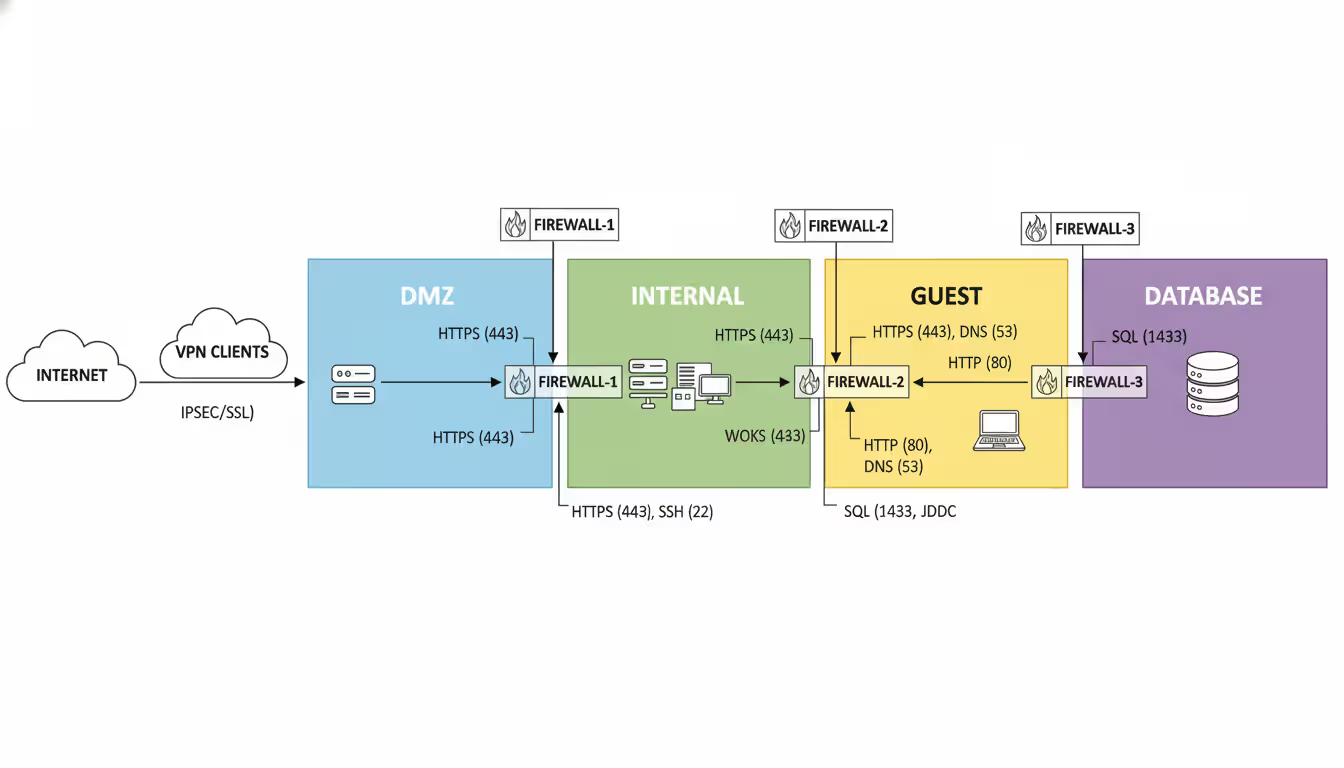
Perimeter-focused models create security zones radiating inward from the internet connection. Classic three-tier setups place web servers in a DMZ (demilitarized zone), applications in a middle tier, and databases in a protected core. Firewalls sit between each layer. This worked great in 2005 when most traffic flowed in from the internet and back out. Today, with microservices and cloud APIs, 70-80% of traffic flows east-west between internal systems, bypassing perimeter controls entirely.
Zero-trust architecture assumes everything is hostile—even internal connections. Every request gets verified regardless of where it comes from. Instead of "you're on our internal network, so you're trusted," zero-trust says "prove who you are and that you need this specific resource, every single time." A salesperson accessing CRM data gets exactly that—CRM access—not the entire sales network segment.
Micro-segmentation cranks granularity to 11, creating policies for individual workloads or applications instead of grouping dozens together. Rather than one segment for "all database servers," you segment each database independently. Cloud environments love this approach. A containerized application might have 200 microservices, each with its own security policy allowing only specific API calls from designated sources.
Hybrid approaches mix multiple models because real networks are messy. You might use perimeter defense for legacy Windows servers in your data center, micro-segmentation for Kubernetes clusters in AWS, and zero-trust for remote employee access. Just keep policy frameworks consistent—conflicting security models create gaps attackers exploit.
Understanding Network Segmentation Diagrams
A good network segmentation diagram explains your security architecture without needing a 50-page document. Here's what makes them useful versus decorative.
Security zones appear as distinct colored regions—each labeled with its purpose and risk level. "Guest Wi-Fi" (low trust, green), "Payment Processing" (high sensitivity, red), "Developer Sandbox" (medium risk, yellow). Color coding lets viewers instantly assess risk levels without reading fine print.
Traffic flows show what communications you actually allow. Arrows indicate direction: can Segment A initiate connections to Segment B, or only respond to requests? Protocol labels matter too—"HTTPS/443" is way more specific than "web traffic." I've reviewed diagrams showing just boxes and lines, which told me nothing about whether RDP, SSH, or database connections were permitted.
Control points mark where security gear lives. Firewall icons at segment boundaries show what's inspecting traffic. Intrusion detection sensors, web application firewalls, network access control systems—all get explicit representation. Otherwise, you can't tell if a traffic flow is monitored or wide open.
Asset groupings indicate what each segment contains without cluttering diagrams with every device. "Employee Laptops (300+)," "File Servers (5)," "IoT Sensors (120)" conveys segment contents and scale. I've seen diagrams attempting to show every workstation individually, which just created unreadable messes.
External connections sit at diagram edges—internet links, partner VPNs, cloud service integrations, remote access points. These boundaries are where attacks enter, so they need crystal-clear representation. One logistics company discovered during a diagram review that they'd completely forgotten to document 3 partner VPN connections that had been running unsecured for 2 years.
Build diagrams collaboratively. Network engineers know the physical infrastructure, security teams know the policies, and sysadmins know which systems actually talk to each other. Update them quarterly—outdated diagrams cause more harm than no diagrams by giving false confidence.
Author: Rachel Denholm;
Source: milkandchocolate.net
How to Plan and Implement Network Segmentation
Moving from flat to segmented architecture without breaking everything requires methodical planning. Here's the process that actually works.
Discovery and inventory means finding everything on your network—authorized and otherwise. Automated scanners identify devices, IPs, OSes, and running services. You'll be amazed what turns up. A hospital's discovery found 180 medical devices nobody had documented, including CT scanners directly connected to the internet. Can't segment what you don't know exists.
Traffic analysis reveals who talks to whom and why. Run packet captures for 2-4 weeks to establish baseline communication patterns. Which servers connect to which databases? What protocols? How much data? A financial services firm discovered their marketing team's WordPress site was initiating connections to the trading platform—totally unauthorized but somehow working for years on a flat network.
Classify your assets by sensitivity and business function. Critical stuff handling sensitive data gets high-security classification. Guest Wi-Fi gets low. Common categories: executive systems, customer data, financial apps, development/test environments, operational tech, IoT devices, guest access. Each category informs segmentation decisions.
Define security zones based on those classifications. Don't create 50 segments—you'll drown in complexity. Five to fifteen well-designed zones handle most environments. A university might establish: student housing, academic departments, research labs, administrative offices, data center, guest networks. Each zone gets defined security requirements and allowed traffic patterns.
Build policies specifying exactly what crosses segment boundaries. Start with "deny everything," then permit specific necessary connections. Document why each rule exists—"Web tier (DMZ) can initiate MySQL/3306 to database tier for order processing per APP-2847." Future you will thank present you when troubleshooting at 2am.
Phase the rollout instead of trying to segment everything simultaneously. Start easy—guest networks and contractor access—then tackle complex internal systems. Each phase includes configuration, testing, monitoring, rollback planning, and user communication. That hospital segmented guest Wi-Fi first (easy, low-risk), then administrative systems, then medical devices, finally clinical applications. Took 8 months total but zero major outages.
Test extensively before production cutover. Verify legitimate traffic flows and blocked traffic actually blocks. Include edge cases: backups, patch management, monitoring systems, disaster recovery. A manufacturer segmented successfully but forgot about their backup software—discovered the oversight when that night's backup failed on every segmented server.
Document everything because six months from now nobody will remember why specific rules exist. Network diagrams, policy matrices, implementation guides, troubleshooting procedures. Train your ops team on the new architecture, what traffic is legitimate, how to request changes, and how to identify segmentation-related issues versus application bugs.
Monitor and adjust continuously after deployment. SIEM alerts on blocked traffic might indicate either attacks or legitimate needs requiring policy updates. Review quarterly to tighten overly permissive rules and close gaps. Segmentation isn't a project you complete—it's an ongoing security practice.
Network Segmentation Tools and Solutions Comparison
Choosing the right network segmentation tools and network segmentation solutions depends heavily on your infrastructure. Here's what's actually available beyond vendor marketing.
Vendor/Product
Where It Runs
What Makes It Useful
Who Should Consider It
Rough Cost
Cisco ISE
Your data center or hybrid
Assigns VLANs dynamically, profiles device types, controls network access, works especially well with Cisco gear
Shops already running Cisco infrastructure who want unified access management
$$$$ (100K+)
VMware NSX
On-premises or cloud
Segments individual VMs and containers, distributes firewall to every hypervisor, automates policy creation, spans multiple clouds
Heavy VMware users needing workload-level control
$$$$ (150K+)
Illumio Core
Cloud service or hybrid
Maps application dependencies automatically, visualizes traffic flows, creates zero-trust policies, works across diverse environments
Complex hybrid environments where you can't easily see what connects to what
$$$ (75K-200K)
Palo Alto Prisma Cloud
Cloud-native SaaS
Secures containers and Kubernetes, protects cloud workloads, suggests policies automatically, integrates with DevOps pipelines
Cloud-first companies running containerized apps that change constantly
Budget-conscious small businesses with technical staff who can configure it themselves
$ (free software, hardware costs only)
Evaluate features that match your actual needs, not the longest bullet list:
Policy interfaces simple enough that security analysts can modify rules without being network engineers
Automated discovery that maps existing traffic and suggests starting policies instead of making you build everything from scratch
Integration points with your existing security stack, Active Directory, cloud platforms, and ticketing systems
Performance overhead because inspecting every packet costs CPU cycles—measure throughput impact before buying
Scalability for 3-5 years of growth, not just today's device count
Compliance reporting that generates audit documentation proving your policies work as claimed
Deployment choices significantly impact success. Cloud-based tools deploy in hours but add latency when inspecting on-premises traffic. Hardware appliances deliver maximum throughput but require procurement lead times and rack space. Hybrid deployments attempt balancing both but increase architectural complexity.
Total cost includes way more than license fees. Professional services for deployment typically run 30-50% of licensing costs. Annual maintenance runs 20-25% of initial investment. Training for your team costs $2K-5K per person. Hardware for appliance-based solutions can exceed software costs. A 300-person company might spend $80K initial implementation, then $25K annually for maintenance and support.
Vendor lock-in matters if you might switch platforms. Solutions deeply integrated with specific infrastructure (Cisco ISE with Cisco switches, VMware NSX with vSphere) work beautifully in those ecosystems but don't transfer to other platforms. Multi-vendor environments benefit from platform-agnostic tools, even if they cost slightly more.
The industry is moving from hardware appliances to software-defined policies that follow workloads wherever they run—on-premises, AWS, Azure, containers, whatever. Pick solutions supporting both current infrastructure and future cloud migrations unless you enjoy replacing security tools every few years.
Author: Rachel Denholm;
Source: milkandchocolate.net
Common Network Segmentation Mistakes to Avoid
Even experienced teams make predictable mistakes. Learn from others' expensive lessons.
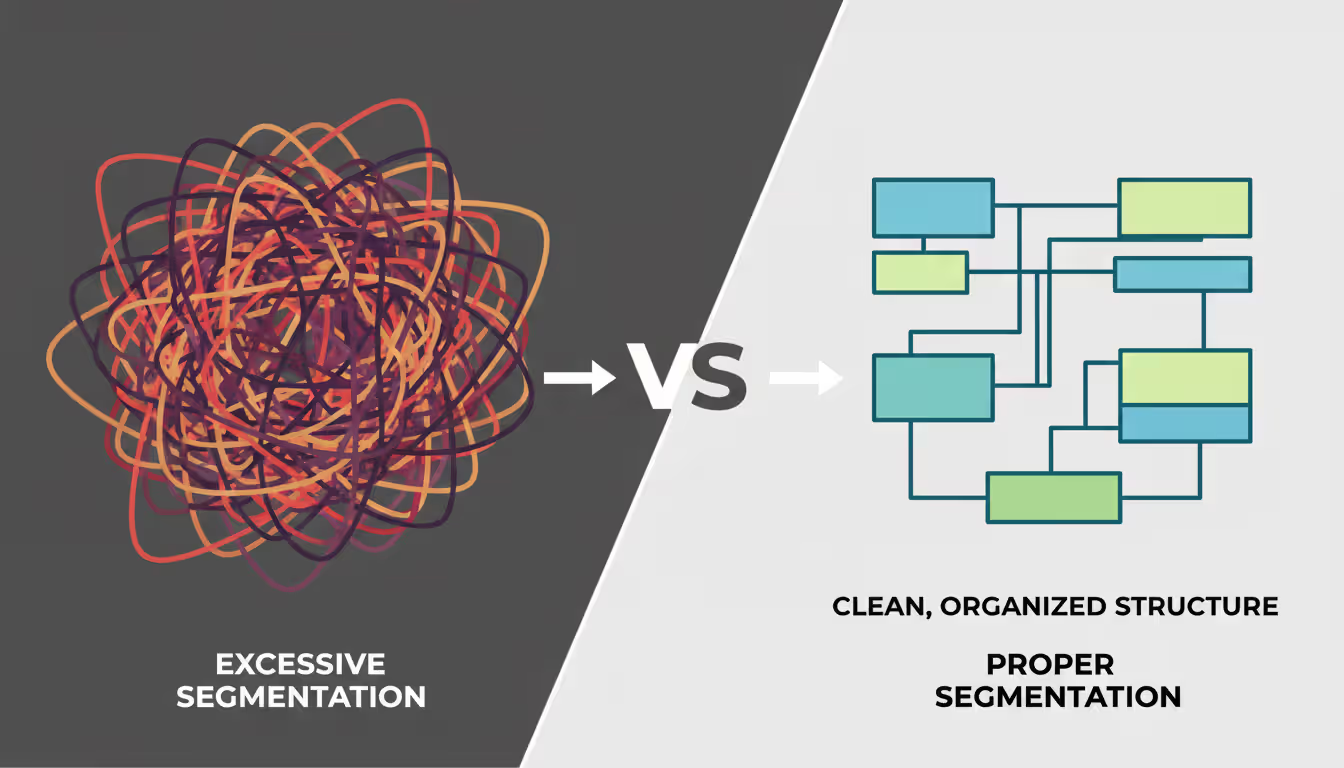
Creating too many segments with Byzantine interdependencies makes management impossible. An insurance company built 52 segments with 800+ cross-segment policies. Troubleshooting connectivity issues required hours of policy archaeology, and security teams feared modifying anything. Start with 5-10 broad segments along functional boundaries, then add granularity only where risk clearly justifies complexity. Ten well-managed segments beat 40 chaotic ones.
Documentation shortcuts leave future teams clueless. When that network engineer who implemented segmentation takes another job, undocumented designs become mysterious black boxes nobody dares touch. Write down why each segment exists, what business functions it serves, which traffic flows it requires, and who owns the applications. Include contact info for app owners who can validate connection requirements during audits.
Focusing only on perimeter traffic while ignoring lateral movement between internal systems leaves you vulnerable. Modern attacks compromise low-value endpoints then pivot laterally to juicy targets. The 2013 Target breach entered through HVAC vendor credentials, then moved laterally to point-of-sale systems. Perimeter segmentation wouldn't have helped—internal segmentation would have blocked that lateral jump.
Set-and-forget policies fail as environments evolve. Applications change, new systems deploy, business needs shift. That firewall rule opened for a temporary project becomes permanent because nobody closed it. Schedule quarterly policy reviews, implement change management for segment modifications, monitor blocked traffic for legitimate needs. A media company discovered 40% of their segmentation rules were obsolete, allowing unnecessary access for years.
Skipping production-like testing creates outages when critical workflows break. Backup systems, monitoring agents, patch management, disaster recovery—all have network dependencies that might not be obvious. A city government segmented their network Friday afternoon (first mistake), discovered Monday morning that weekend backups failed because backup servers couldn't reach newly segmented systems. Lost two days of backup coverage fixing it.
Ignoring performance requirements turns segmentation into a bottleneck. Every inspection point adds latency and limits throughput. Video conferencing, CAD file transfers, database replication—high-bandwidth apps need performance testing before you route them through security appliances. Baseline metrics before segmentation, then verify key applications maintain acceptable performance afterward.
Failing to communicate changes creates user frustration and help desk chaos. When applications suddenly stop working, users just know "something broke." Proactive communication about planned segmentation, expected impacts, and who to contact for issues prevents panic. Include app owners, department heads, and help desk staff in planning so they understand benefits and can support users through hiccups.
Shared credentials across segments undermine the whole effort. Service accounts and admin credentials with cross-segment access become skeleton keys for attackers. That domain admin account with access everywhere? Compromising it bypasses segmentation entirely. Use unique credentials per segment and apply least-privilege to service accounts as rigorously as user accounts.
Quote from industry expert:
The networks that stay secure treat segmentation like software development—continuous iteration, constant monitoring, regular refactoring based on threat intelligence and business changes. The ones that get breached built segments once in 2015 and never touched the policies again
— Marcus Chen
Frequently Asked Questions About Network Segmentation
What is the difference between network segmentation and network isolation?
Segmentation creates controlled pathways between network zones—traffic can flow between segments when security policies explicitly allow it. You might segment databases from web servers, then permit specific SQL queries on port 1433 from authorized application servers. Isolation completely separates networks with zero communication permitted, period. Air-gapped networks are isolated—the classified military network never touches the unclassified network, physically separate infrastructure with no connection points. Use segmentation for operational flexibility with security controls. Reserve isolation for extremely sensitive systems like classified data, critical infrastructure control systems, or research networks that absolutely cannot risk external compromise.
How much does network segmentation cost to implement?
Costs vary wildly based on scale and complexity. A 75-person dental practice might implement basic VLAN segmentation using existing network switches for under $8K (mostly labor configuring it). Mid-sized companies with 500-1,000 endpoints typically invest $60K-180K covering new security appliances, professional services, staff training, and project management. Large enterprises with multi-site networks and thousands of devices can spend $500K+ implementing advanced micro-segmentation across hybrid cloud environments. Don't forget ongoing costs: annual licensing typically runs 20-25% of initial software purchases, maintenance contracts, and training new staff as team members change. Cloud-based solutions reduce upfront hardware costs but charge monthly subscription fees that accumulate over time.
Can small businesses benefit from network segmentation?
Absolutely, maybe even more than enterprises. Small businesses face identical threats but typically lack resources and expertise to recover from breaches. Basic segmentation—splitting guest Wi-Fi, employee devices, servers, and payment systems—provides significant protection with minimal investment. Most small business networking gear supports VLANs at no additional hardware cost, just configuration effort. A veterinary clinic with 12 employees should segment payment terminals from medical record systems and guest Wi-Fi. A retail boutique should isolate point-of-sale from inventory management and owner's office network. These simple divisions contain breaches to single segments, satisfy compliance requirements (PCI DSS for payment cards), and prevent guest Wi-Fi from becoming an entry point to business systems—all achievable without enterprise budgets or dedicated security teams.
What is micro-segmentation and when should you use it?
Micro-segmentation applies unique security policies to individual workloads, applications, or even processes instead of grouping multiple systems together. Traditional segmentation might place 50 web servers in one segment sharing policies. Micro-segmentation creates specific policies for each server or application component. This granularity shines in cloud and virtualized environments where workloads scale dynamically and move between hosts. Consider micro-segmentation when: running containerized applications with dozens or hundreds of microservices, implementing zero-trust architecture requiring per-connection verification, protecting extremely sensitive data needing defense-in-depth, or managing multi-tenant environments where customer data must stay isolated. The administrative overhead requires automation and orchestration tools—manually managing thousands of individual policies isn't realistic. Start with traditional segmentation, then adopt micro-segmentation for specific high-value or high-risk workloads.
How does network segmentation help with compliance requirements?
Regulatory frameworks explicitly require segmentation as a fundamental control. PCI DSS mandates that merchants isolate systems processing card data from general corporate networks and restrict access to only necessary personnel and systems. HIPAA regulations require healthcare organizations to implement technical safeguards preventing unauthorized access to electronic health information—segmentation demonstrates those safeguards. CMMC (Cybersecurity Maturity Model Certification) for defense contractors specifies network segmentation protecting controlled unclassified information. Segmentation helps audits by: reducing scope to specific high-security segments rather than your entire network (potentially cutting compliance costs 40-60%), demonstrating access controls through documented policies and firewall rules, providing logs proving unauthorized connection attempts failed at segment boundaries, and simplifying evidence collection since you're only documenting controls for relevant segments. Many organizations find proper segmentation actually reduces annual compliance expenses by limiting which systems need expensive security controls and intensive auditing.
Does network segmentation slow down network performance?
It depends entirely on implementation approach. Well-designed segmentation often improves performance by containing broadcast traffic, reducing network congestion, and optimizing routing. Splitting a 600-device flat network into six segments shrinks broadcast domains by 83%, dramatically improving response times as devices stop processing irrelevant broadcast packets. However, security controls inspecting traffic at segment boundaries introduce latency—next-gen firewalls performing deep packet inspection add 5-15 milliseconds per connection. High-throughput applications sometimes experience reduced speeds if security appliances become bottlenecks. Best practices: baseline performance metrics before starting (document current throughput, latency, application response times), test throughput across segment boundaries during pilot deployment, right-size security appliances to handle expected traffic volumes with headroom for growth, and enable hardware acceleration features in firewalls. Most users notice zero performance impact from properly implemented segmentation—minor latency increases are imperceptible compared to security and compliance benefits gained.
Segmentation transforms your security model from "keep threats out" to "contain threats when they get in"—because they will get in eventually. The investment in planning, tools, and implementation pays off through measurably reduced attack surface, simplified compliance, faster incident response, and most importantly, breaches that affect one segment instead of your entire organization.
Start your segmentation journey with clear objectives. Are you addressing specific compliance requirements? Protecting particular sensitive systems? Implementing zero-trust principles? Different goals suggest different approaches. Begin incrementally—segment guest networks and contractor access first while building expertise, then tackle complex internal systems. The successful deployments I've seen treat segmentation as continuous security practice, not a completed project. They refine policies quarterly based on threat intelligence, business changes, and operational lessons learned.
Networks keep expanding with remote workers, cloud migrations, IoT proliferation, and partner integrations. Segmentation provides the architectural framework maintaining security across increasingly complex environments. The real question isn't whether to segment—it's how fast you can implement this fundamental practice before the next breach exploits your flat network architecture.
Ethernet remains the backbone of reliable network connectivity in homes, offices, and data centers. This guide explains how wired connections work, compares Ethernet vs WiFi performance, covers cable types and speeds, and provides practical troubleshooting advice for common connection problems
Out-of-band management provides independent administrative access to critical infrastructure when primary networks fail. This guide covers implementation strategies, technology options, security considerations, and best practices for deploying reliable out-of-band access across distributed IT environments
Network discovery automates the process of identifying and cataloging devices connected to your infrastructure. This guide covers discovery methods, compares leading tools, and provides practical solutions to common challenges IT teams face when implementing network visibility
Master Kubernetes cluster monitoring with comprehensive guidance on tools, metrics, architecture, and implementation. Compare Prometheus, Grafana, Datadog, and other solutions while learning setup procedures, best practices, and disaster recovery strategies for production environments
The content on this website is provided for general informational purposes only. It is intended to offer insights, commentary, and analysis on cloud computing, network infrastructure, cybersecurity, and IT solutions, and should not be considered professional, technical, or legal advice.
All information, articles, and materials presented on this website are for general informational purposes only. Technologies, standards, and best practices may vary depending on specific environments and may change over time. The application of any technical concepts depends on individual systems, configurations, and requirements.
This website is not responsible for any errors or omissions in the content, or for any actions taken based on the information provided. Users are encouraged to seek qualified professional advice tailored to their specific IT infrastructure, security, and business needs before making decisions.